Model-Based Enterprise: Worth It for a SolidWorks Team?

You can stop maintaining the same information in a model, a drawing and a PDF, and let the model carry it. That is what Model-Based Enterprise promises. Whether it is worth what it asks of you depends on the size of your team, and there is a smaller step worth taking first.
Engineers lose hours every week to data that is out of date, in the wrong place, or gone — Onshape's research puts it at around seven hours a week. The reasons are mundane.
Documents multiply. The same information lives in a drawing, a PDF and a spreadsheet, and each one has to be updated by hand.
Updates get missed. A superseded document reaches manufacturing, and the part that comes back does not match the model.
Nobody owns the current version. With data spread across platforms, coordinating between departments becomes its own job.
What Model-Based Enterprise means
.webp)
MBE makes the 3D model the authority instead of the drawing. Annotations and Product and Manufacturing Information live on the model, and CAD, CAE and CAM tools read from it through a connected chain of data.
The point is not the 3D. It is that there is one place the information lives, so there is nothing to keep in sync.
Who is actually doing it
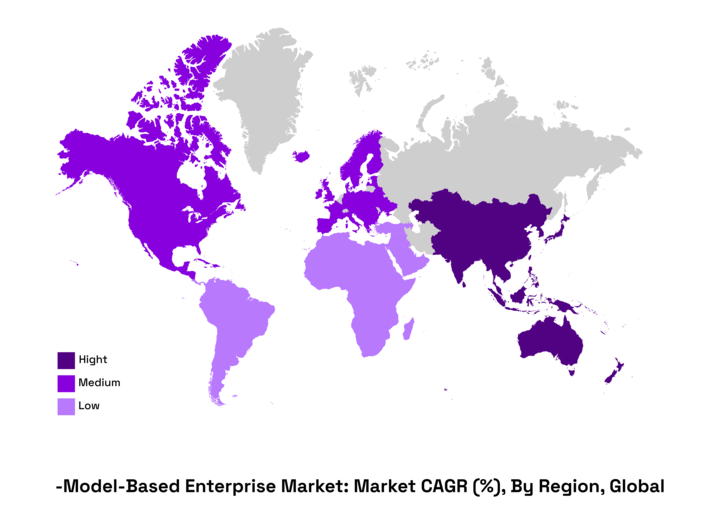
Automotive got there first, and aerospace, defense and advanced manufacturing followed. North America leads on adoption.
The pattern behind that list is worth noticing: they are industries with large engineering organizations, long programs, and regulatory reasons to prove what was released and when.
And who is not
Most small and mid-sized manufacturers. Not because the idea is wrong, but because of what adoption asks for.
It means changing systems people already know, which meets resistance for good reasons. It means buying software and training everyone on it — tens to hundreds of thousands for an SME, more for a large enterprise, plus maintenance and updates after that.
And it takes time. Requirements and planning run weeks to months. Architecture and software selection, weeks to months. Building or customizing the system and connecting it to your existing IT, several months to a year. Testing, weeks to months. Then training and rollout.
For a ten-person engineering team, that is a program, not a project.
The step before that step
Most of what an SME actually loses to bad data does not need a full MBE program to fix. It needs one current version of every file, references that do not break, and reviewers who can see the model.
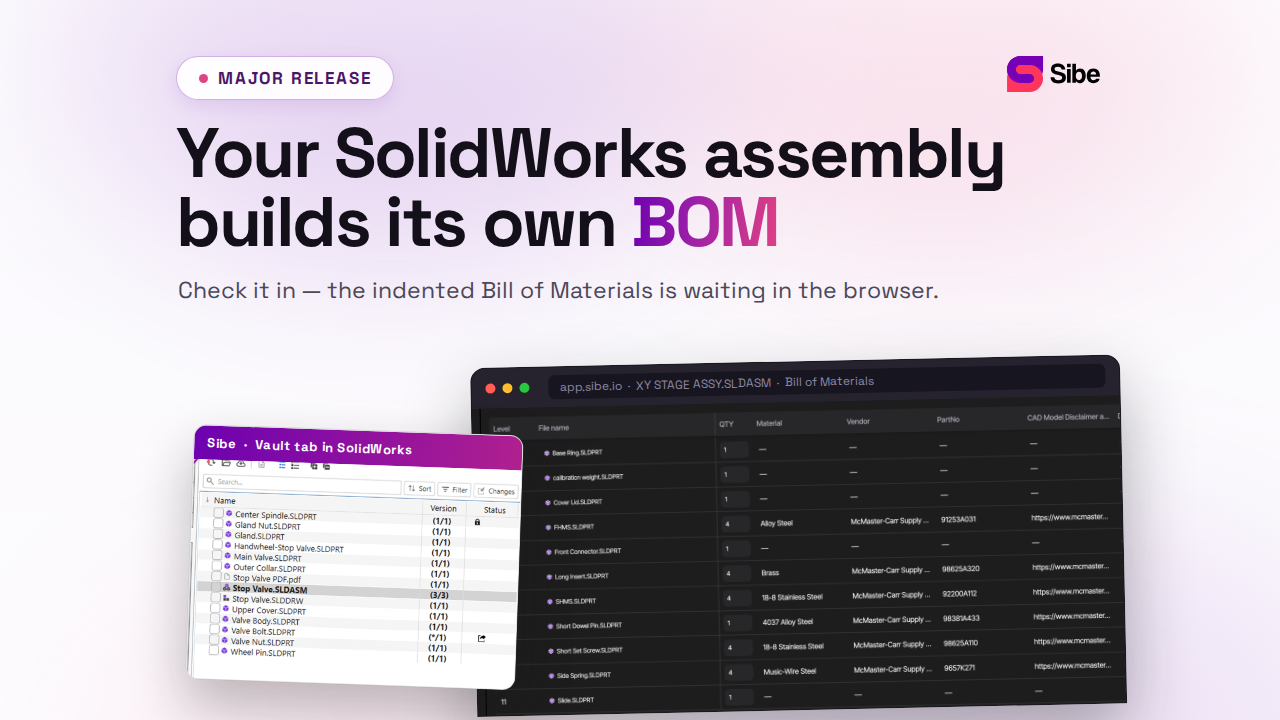
That is what Sibe does. Engineers check files in and out directly in SolidWorks, every version is recorded automatically, and assembly references resolve without repair. Reviewers open the model in a browser through a share link, with no CAD license and no account.
Setup is under 20 minutes, there is no server to stand up, and the pricing is per seat and published. It does not replace your workflow — the engineers keep working in SolidWorks.
If MBE is the right destination for your organization, this is a reasonable first leg: get the data under control before you rebuild how it flows.
How to decide
- Count what out-of-date data costs you in a normal week — rework, wrong versions, hunting for files
- Ask whether the fix is one source of truth, or a change to how information is authored
- If it is the first, that is weeks of work, not a year
- If it is genuinely the second, budget the program properly rather than half-adopting it
No servers, no VPNs, no admin hassles.
Book a free Demo with Ken to see Sibe in action


Ken Maren
Chief Solutions Architect
SolidWorks Expert with 30+ Years Experience
Redirecting...
Demo bookings need a company email address. To use a personal one, choose Try Sibe for free below.
.png)